


By Andrea Au CPA
 Andrea graduated from the University of Alberta in 2018 with a major in accounting. She successfully wrote the September 2020 CFE and obtained her CPA designation in 2021. Andrea is a Financial Analyst at TELUS. In part 2 of this blog series, she provides her tips and tricks for successfully delivering an oral presentation in Capstone 1. If you haven’t read part 1, click here.
To succeed in your oral presentation in Capstone 1, it is important to plan ahead and stay on task, contribute actively to group work, know your financials, prepare for possible questions from the panel, and practice, practice, practice. Let’s discuss each of these items in more detail.
Tip #1: Plan ahead and stay on task
I recommend you start planning by creating a project plan at the very beginning of the module. This sets expectations for the team and helps everyone stay organized. Once you have a plan, it is very important to stay on task. Remember that team members may be relying on your work to complete their parts of the project, and may not be able to work on certain days due to professional and personal commitments. It is important to designate someone to update the plan regularly, based on the team’s progress.
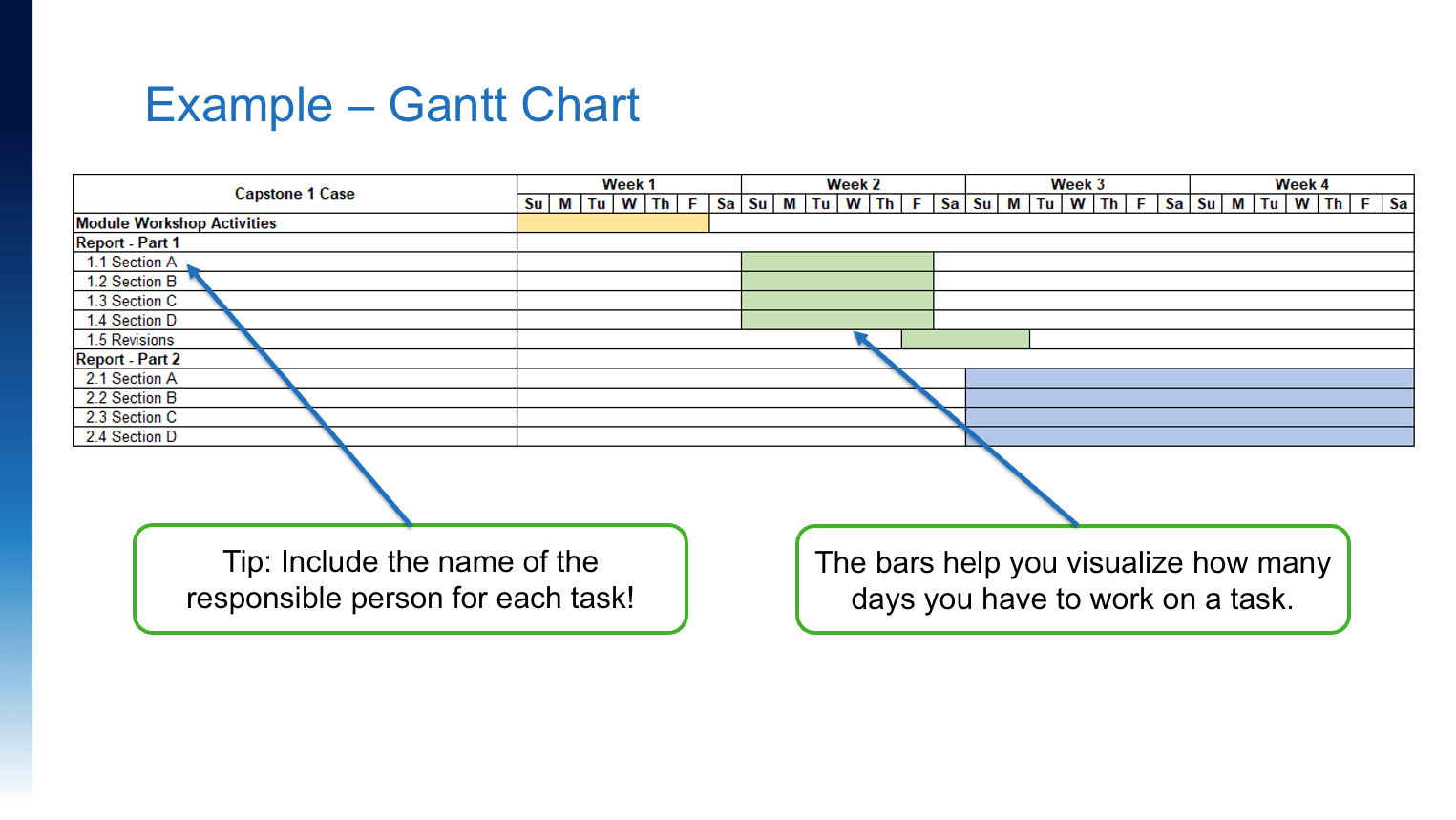
Here is a very simple example of a Gantt chart for Capstone 1. It shows the weeks and days on top and each individual task on the side. You can also include the name of the person responsible for each task on the side.
Tip #2: Actively contribute
Take the time to read through and understand the case; I cannot emphasize this enough. If something isn’t clear, ask your team, and if your team isn’t sure, ask the facilitator. Understanding the case will help you and your team become more successful in executing your presentation and in answering questions from the panel. It will also help you, as an individual, be more prepared for the CFE.
To encourage active participation, assign tasks to each team member, taking into consideration their strengths and weaknesses. That said, it is still important for each team member to know all aspects of the case in order to be aware of—and agree with—the recommendations to the client.
Tip #3: Practice, practice, practice
Practicing individually and as a group will minimize potential hiccups during your oral presentation. As you practice, remember the following key points:
- Speak clearly. Ensure everyone presents their part in a clear and concise tone. Be patient with those who are not comfortable with public speaking and those for whom English isn’t their first language.
- Do not read off the slides or a piece of paper. Face the audience and demonstrate conviction in your voice. If you are struggling, use cue cards, but that should be a last resort.
- Maintain eye contact with the audience. Constantly looking away—for example, at your slides or at your cue cards—is not as engaging as looking at the audience. If you are presenting remotely, look directly into the camera.
- Avoid excessive hand gestures. This can be distracting. If you have a habit of talking with your hands (like me), I recommend holding them together in front of or behind you.
- Manage your time well. Budget time for each section of the presentation, and as you rehearse (individually and as a team), time yourself and discuss where to reallocate time.
Tip #4: Know your financials
One of the most important parts of your presentation will be conveying your financials to the audience. As a team, ask yourselves:
- Which benchmarks are your audience concerned with?
- How are these benchmarks calculated?
- What is the industry standard?
- Will our recommendations meet (or not meet) these benchmarks?
The panel will always refer back to the financials as support for the strategic direction your team recommended. So it is important to understand your financials to be able to explain why you are making a recommendation.
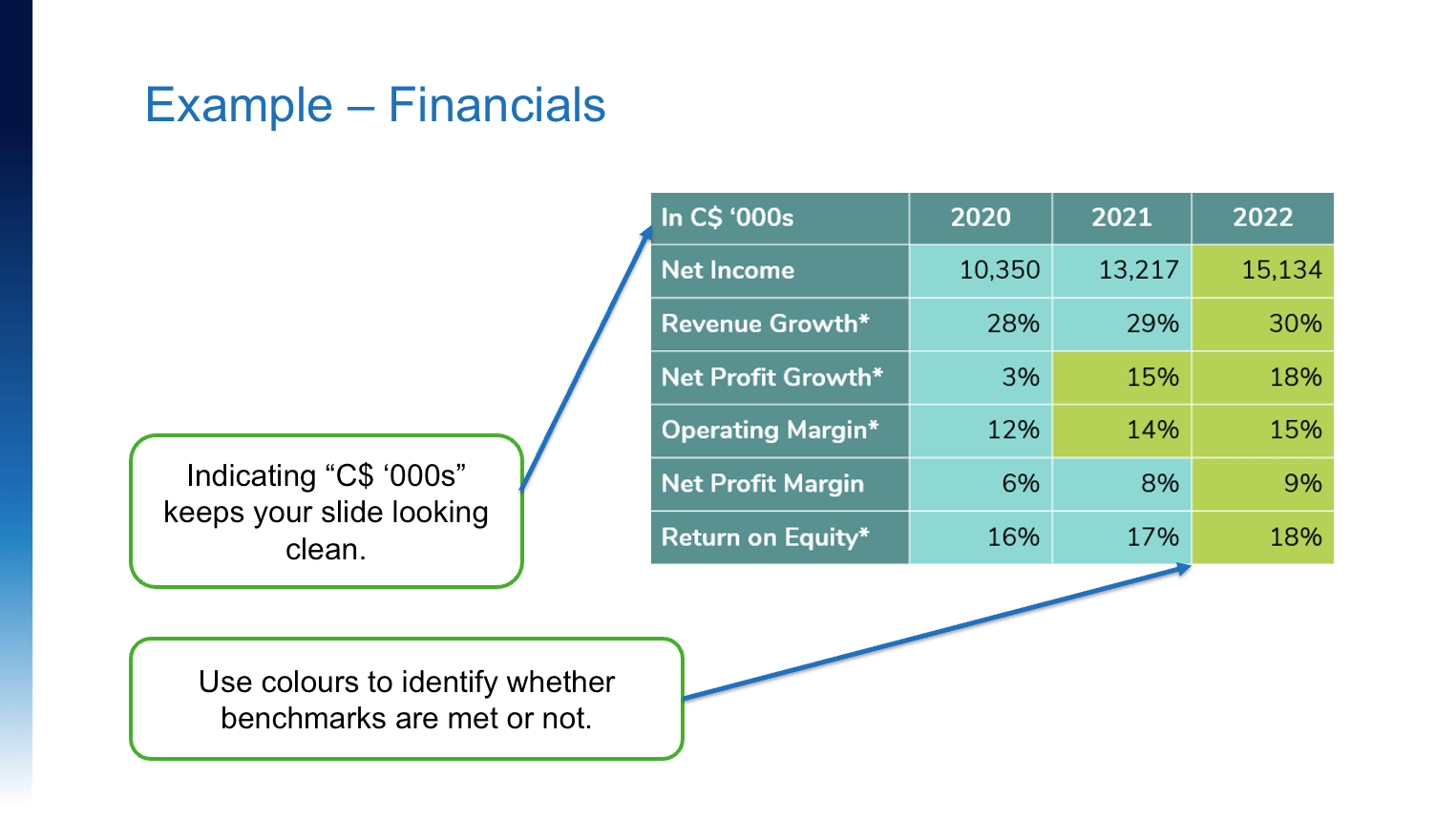
This was my team’s table of financials during our oral presentation. As you can see, the table helped keep the financials organized and easy to read.
Tip #5: Prepare for potential questions
I recommend preparing a variety of questions that cover different parts of the presentation. As a team, brainstorm one to two questions per team member. This will help bring different perspectives to the Q&A discussion.
Once you have your questions, jot them down and either answer them as a group, or answer them individually and regroup to ensure everyone agrees with the answers. As you prepare your answers, keep in mind that the panel doesn’t have a copy of your board report and is seeing your presentation for the first time, so it is important to provide as much context as possible.
Include an appendices section in your PowerPoint slides, as this will provide support in addressing any potential questions.
These tips helped me and my team succeed in Capstone 1. For more information on how to prepare for and deliver a flawless presentation, watch my CPA PEP Talks: Capstone 1 video. Best of luck!
The views expressed in this post are those of the guest writer, Andrea Au CPA. Please refer to cpawsb.ca for the latest guidelines from the CPA Western School of Business.